
which means that the global governance system must keep pace with the times,
Hero Selling Points / Brief
Cost-Efficiency:
Ideal for high-volume production with low unit costs.
Complex Geometries:
Achieve near-net shapes with thin walls and intricate details.
Excellent Surface Finish:
Smooth as-cast surfaces ready for minimal secondary processing.
Core Parameters
| Parameter | Specification |
| Material |
ADC12, A380, A360, AlSi12 / ADC12, A380, A360, AlSi12 |
| Machine Tonnage | 160T - 2500T |
| Min Wall Thickness | 0.8mm - 1.5mm |
| Tolerance | DIN ISO 2768-m (As-cast) |
| Post-Processing | CNC Machining, Deburring, Shot Blasting |
Product Images
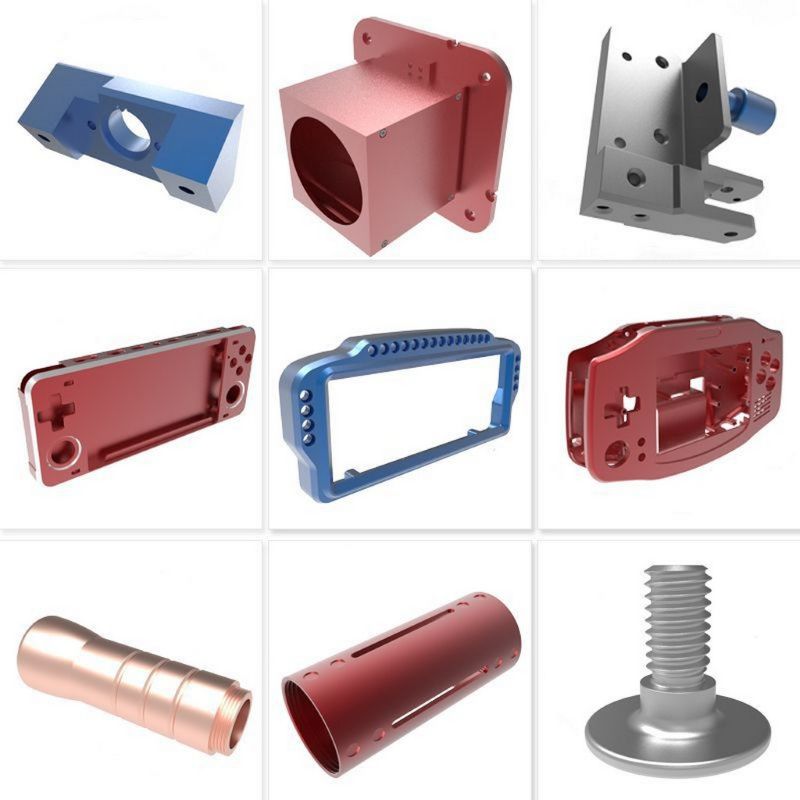
Be used in a wide range of industries.
Mass Production Components
Aluminum Die Casting
Custom Die Cast Parts
Industrial & Consumer Applications
Bulk Delivery & Production Capacity
Smart Manufacturing & Production Capabilities
Technical Principle
Technical Principle
Die Casting involves injecting molten aluminum into a reusable steel mold (die) under high pressure. The metal solidifies rapidly within the mold, after which the die opens to eject the finished part. This process allows for extremely fast production cycles and the creation of "near-net shape" parts that require little to no additional machining, significantly reducing material waste and labor costs.
Core Advantages
High Production Rate
Capable of producing thousands of parts per day with a single mold.
Dimensional Stability
Exceptional repeatability ensuring every part fits the assembly perfectly.
Consolidated Parts
Integrate multiple features into a single casting to reduce assembly time.
Application Scenarios & Problem Solving
Our latest projects
Shanghai Jwell machinery Workshop co-operation projects
Problem NO.1: High unit costs for complex automotive components in mass production.
Replacing CNC-machined assemblies with a single, high-pressure die-cast part, reducing costs by up to 60%.
Problem NO.2: Electromagnetic interference (EMI) in telecommunications equipment.
Die-cast aluminum enclosures that provide natural EMI/RFI shielding while protecting internal sensitive electronics.
Problem NO.3: Poor heat dissipation and excessive weight in electric vehicle battery packs, limiting range and safety.
Integrated die-cast aluminum battery tray with built-in cooling channels, offering superior thermal management while reducing overall vehicle weight by 20-30% compared to traditional steel structures.
Case Study
Client: A European automotive Tier-1 supplier.
Challenge
Needed a lightweight, leak-proof housing with integrated cooling channels for a new EV model.
Result
Optimized the mold design for HPDC, achieving a 30% reduction in weight compared to the previous steel design and passing all pressure tests.
Products Description
FAQ
01.Can you handle low-volume orders for die casting?
02.What is the lifespan of a die casting mold?
03.How do you prevent porosity in aluminum castings?
04.What surface finishes are available for aluminum die castings?
05.Are aluminum die castings suitable for high-temperature applications?
Send Your Inquiry / Get Quote Within 24 Hours